
Beginner Guide to Bullet Journaling: Organize Your Life Creatively
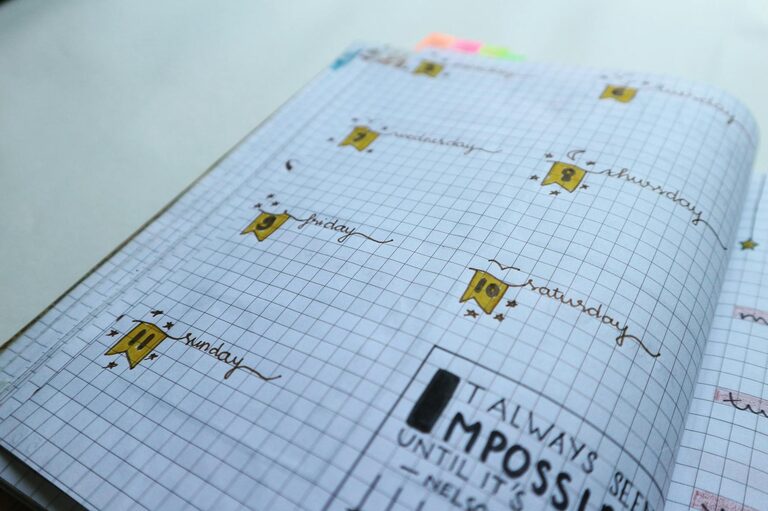
Bullet journaling has become a popular method for organizing tasks, tracking habits, and capturing ideas — all while allowing personal creativity to shine. If you’re new to bullet journaling, this guide will walk you through the basics to help you get started effectively and enjoy the process.
What Is Bullet Journaling?
Developed by Ryder Carroll, bullet journaling is a customizable system that combines elements of a planner, diary, and to-do list. It uses simple symbols (“bullets”) and structured layouts to keep track of daily tasks, events, and notes in one notebook. The system is flexible, making it perfect for everyone—from busy professionals to students and creatives.
Why Try Bullet Journaling?
– Boosts productivity: Helps you focus on priorities and deadlines.
– Reduces overwhelm: Visualizes your plans and breaks goals into manageable steps.
– Encourages creativity: Customize pages with doodles, colors, and layouts.
– Tracks progress: See how habits, moods, or projects evolve over time.
– Simplifies organization: Eliminates scattered notes across apps or papers.
Essential Supplies to Start Bullet Journaling
You don’t need fancy tools, but here are some basics:
– Notebook: Dot grid notebooks like Leuchtturm1917 are popular, but lined or plain works too.
– Pen: Choose a smooth, reliable pen. Some prefer fineliners for detail.
– Ruler: To keep lines neat and layouts structured.
– Optional: Colored pens, markers, stickers, and stencils for decoration.
Key Bullet Journal Elements Explained
Index
The index sits at the front and acts as a table of contents. Each time you create a new section or list, note the page number here for quick reference.
Future Log
Plan months ahead with a future log. List events, deadlines, or big goals for upcoming months.
Monthly Log
This includes a calendar overview and a task list for the month. Helps you stay on track with deadlines and appointments.
Daily Log
Your day-to-day entries; log tasks, events, and notes. Bullets indicate the type of entry:
– Task: • (dot)
– Event: ○ (circle)
– Note: – (dash)
As you complete tasks, mark them with an “X.” If postponed, use a “>” to migrate them.
Collections
Collections are themed lists or logs such as habit trackers, book lists, meal plans, or project outlines.
Step-by-Step to Create Your First Bullet Journal
- **Set up the index:** Reserve the first few pages.
- **Create future log:** Divide pages into months with key appointments.
- **Create monthly log:** Calendar and task list for the current month.
- **Begin daily logs:** Write daily dates followed by tasks and notes.
- **Add collections as needed:** For habits, ideas, or trackers.
- **Use rapid logging:** Use bullets to jot down information quickly.
- **Review regularly:** Migrate incomplete tasks and check progress.
Tips for Maintaining Your Bullet Journal
– Keep it simple in the beginning to avoid feeling overwhelmed.
– Experiment with layouts until you find what fits your needs.
– Use symbols consistently for clarity.
– Set aside daily or weekly time to update your journal.
– Don’t stress about perfection—your journal is for you.
Popular Bullet Journal Layout Ideas
– Habit tracker: Mark daily habits to build consistency.
– Mood tracker: Note emotional states to improve self-awareness.
– Gratitude log: Write things you’re thankful for each day.
– Brain dump: Clear your mind by jotting down random thoughts.
– Goals page: Define short-term and long-term goals.
Conclusion
Bullet journaling is a versatile tool that fuses organization with creativity. Whether you want to manage your workload better, cultivate new habits, or simply enjoy a mindful hobby, starting a bullet journal can be a fun and fulfilling step toward a more organized life. Grab a notebook and start your custom system today!